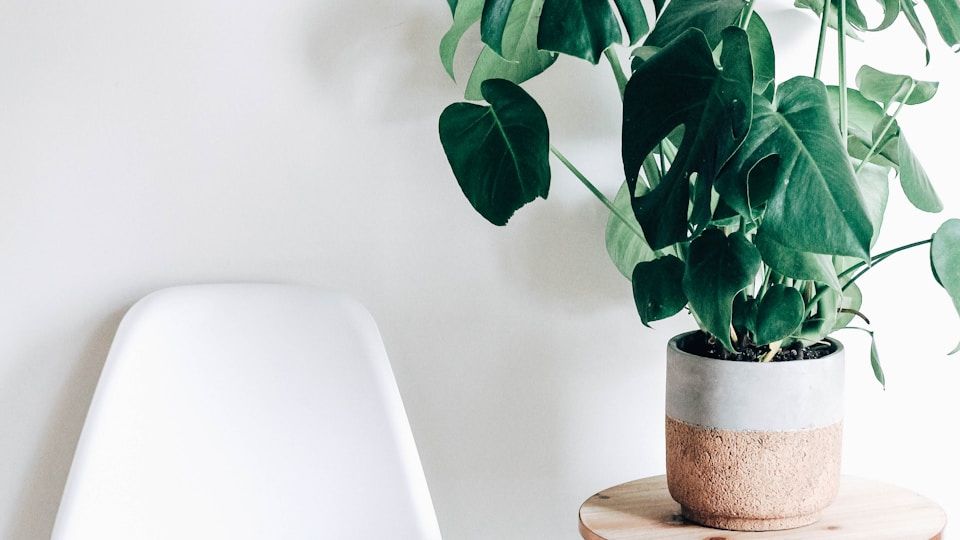
How to Create a Stunning Indoor Jungle
I live in a 1,200-square-foot apartment with 47 plants. My partner, who was initially skeptical, now absentmindedly waters plants while on phone calls and greets the fiddle leaf fig by name (Leonard). The transformation of our space from 'apartment' to 'jungle' happened gradually, one plant at a time, and it has changed the way our home looks, feels, and even smells.
Creating an indoor jungle isn't about cramming plants into every corner (although that's tempting). It's about layering heights, textures, and forms to create that lush, immersive feeling you get when you walk into a botanical conservatory or a tropical greenhouse. Done well, it looks deliberate and beautiful rather than cluttered. Here's how I built mine and how you can build yours.
The Three-Layer System
Every good indoor jungle has three visual layers, just like a real forest: a canopy layer, a mid-story, and an understory.
Floor plants (the canopy): These are your statement pieces — tall plants that draw the eye upward and create the skeleton of your jungle. Fiddle leaf fig (for drama), bird of paradise (for tropical vibes), rubber plant (for bold, glossy foliage), Monstera deliciosa (for sculptural interest), and dracaena (for easy care and height). You need at least one per room, ideally reaching at least 4-5 feet to create that canopy feeling.
Mid-level plants (the mid-story): These sit on tables, plant stands, credenzas, and bookshelves. Peace lily, calathea, Chinese evergreen, ferns, and medium-sized philodendrons live in this zone. They fill the visual space between the tall floor plants and the trailing plants above, creating that dense, layered look.
High plants (the understory/trailing): Hanging plants and trailing plants on high shelves complete the immersion. Pothos, string of pearls, string of hearts, trailing philodendron, English ivy, and lipstick plant cascade downward, creating green 'curtains' that make the space feel wrapped in foliage. The trailing layer is what transforms 'a room with plants' into 'a room that feels like a jungle.'
Starting Your Collection (Without Going Broke)
I've heard the concern: 'Plants are expensive.' Some are. A large fiddle leaf fig from a nursery can run $80-150. But there are many ways to build a collection affordably:
Start with one statement plant and build around it. A single large plant makes more impact than ten small ones scattered randomly. If you can invest in one good floor plant, do that first.
Propagate aggressively. A single pothos can become ten plants within a year. Every time you prune, root the cuttings in water and pot them up. Every spider plant baby, every Monstera node, every succulent leaf can become a new plant. Propagation is free and incredibly satisfying.
Trade with friends and neighbors. The plant community is generous. Facebook groups, local plant swaps, and the Buy Nothing groups in your area are goldmines for free plants and cuttings. I've acquired about a third of my collection through trades.
Check the clearance section. Garden centers and hardware stores mark down plants that look rough — droopy, yellow, or leggy. With proper care, most of these plants recover fully within a few weeks. I got Leonard (the fiddle leaf fig) on a 75% clearance markdown because he'd dropped half his leaves. Three months later, he was fully recovered and gorgeous. Best $12 I ever spent.
Choosing Pots That Don't Compete with the Plants
A common mistake: buying a bunch of different brightly colored, patterned pots in varying styles. The result looks chaotic — the pots compete with each other and with the plants for visual attention.
Instead, stick to a cohesive palette: 2-3 pot colors or materials maximum. My apartment is predominantly white and terracotta, with a few woven baskets for variety. The limited palette lets the plants be the stars.
Materials to consider: Terracotta for a warm, earthy aesthetic (it also breathes, which is good for plants that like to dry out between waterings). White or cream ceramic for modern, clean spaces. Woven baskets for boho or natural styles. Concrete for industrial spaces. Matte black for dramatic contrast with bright green foliage.
Always use an inner nursery pot with drainage holes inside your decorative outer pot. This is non-negotiable. It allows proper drainage, makes repotting easier, and protects your decorative pots from water damage and salt buildup.
Room-by-Room Recommendations
Living room: This is where your statement plants live. A large fiddle leaf fig or Monstera in the corner, mid-level plants on side tables and bookshelves, and a trailing pothos or philodendron cascading from a high shelf. Cluster 3-5 plants near the sunniest window for a lush focal point.
Bedroom: Snake plant and peace lily are ideal — both continue producing oxygen at night. Keep it restful with 2-3 plants rather than a full jungle. A trailing plant on the nightstand or windowsill adds greenery without overwhelming a space meant for sleep.
Bathroom: If you have a window, this is paradise for humidity-loving plants: ferns (especially maidenhair and Boston fern), orchids, air plants, calathea, and pothos. The steam from showers creates a mini tropical environment. Even a windowless bathroom can support a ZZ plant or pothos if you provide occasional time in a brighter room.
Kitchen: Herbs on the windowsill (basil, parsley, chives) are both beautiful and functional. A trailing pothos on top of the cabinets is a classic look. Keep plants away from the stove — heat and grease aren't great for foliage.
Home office: Studies consistently show that plants in workspaces reduce stress and improve concentration. ZZ plant, pothos, and snake plant are all low-maintenance enough to thrive on office-level attention. A small plant on your desk creates a calming focal point during stressful moments.
Maintenance: Keeping 47 Plants Alive Without Losing Your Mind
People ask how I care for so many plants. The honest answer: most of them need very little attention. My weekly routine takes about 30 minutes:
Sunday is watering day. I walk around with a watering can and check every plant. Finger in the soil — dry? Water. Moist? Skip. This takes 15-20 minutes for all 47 plants. Many of them only need water every 2-3 weeks, so I'm only watering about half on any given Sunday.
While watering, I check for pests (quick look at leaf undersides and stems), remove any yellowed or dead leaves, and rotate plants that are leaning toward the light. This adds maybe 10 minutes.
Once a month during spring and summer, I add liquid fertilizer to my watering can. In fall and winter, I stop fertilizing because most plants are dormant and don't need it.
Twice a year, I wipe down large-leafed plants with a damp cloth. Dusty leaves photosynthesize less efficiently and look dull. A quick wipe makes them gleam.
That's it. 30 minutes a week. For a home that looks like a botanical garden and makes every guest say, 'Wow, your apartment feels so... alive.' Which it is. Very, very alive.
The Feeling You Can't Quantify
I could cite studies about how plants reduce stress hormones, improve air quality, boost creativity, and increase perceived well-being. And those studies are real and compelling. But honestly, the reason I keep 47 plants isn't because of research. It's because my home feels fundamentally different with them. The air feels softer. The light filtering through leaves is more interesting than light through bare windows. Watching new leaves unfurl is a small, daily miracle that never gets old.
You don't need 47 plants. Start with three. Put one on the floor, one on a shelf, and one trailing from above. See how it makes you feel. I have a suspicion you'll want a fourth. And a fifth. And eventually, your partner will be naming them too.