How to Grow a Cut Flower Garden for Beautiful Bouquets
Every Monday morning, I walk through my cutting garden with a bucket of water and a pair of sharp snips. Ten minutes later, I'm arranging a bouquet on the kitchen table that would cost $25 at a florist — and mine are fresher, more interesting, and carry the added satisfaction of 'I grew these.' It's one of my favorite rituals of the growing season.
A cutting garden is different from a regular flower garden. It's not about creating a beautiful landscape — it's about production. You're growing flowers specifically to cut and bring inside, which means you plant in rows, harvest aggressively, and choose varieties based on stem length and vase life rather than how they look in the ground. Think of it as a vegetable garden, but for beauty instead of food.
Planning Your Cutting Garden
Location is everything: you need full sun (at least 6-8 hours) and good soil. Rich, well-drained soil amended with compost produces the strongest stems and biggest blooms. I'd recommend starting with a dedicated bed rather than tucking cutting flowers into your landscape — you'll want to harvest freely without worrying about leaving gaps.
Size matters less than you'd think. A 4x8 foot raised bed can produce hundreds of stems per season if you plant intensively and succession sow. My cutting garden is about 200 square feet and provides enough flowers for multiple bouquets a week plus plenty to share with friends. But I started with a single 4x10 foot bed and it was plenty for a weekly kitchen bouquet.
Plant in rows, not drifts. Space rows 12-18 inches apart depending on the crop. This makes it easy to walk between rows for harvesting, weeding, and maintenance. Run rows north-south if possible so both sides get even sun exposure. Install drip irrigation if you can — overhead watering promotes fungal diseases on flowers, and hauling a hose gets old fast.
The Must-Grow Flowers for Beginners
Zinnias are the absolute MVP of the cutting garden and where every beginner should start. They're easy to grow from direct-sown seed, they germinate in days, they bloom in about 60 days from sowing, and — here's the magic — the more you cut them, the more they bloom. Every time you cut a stem, two new ones grow from below the cut. A single zinnia plant can produce 20-30 stems per season. Benary's Giant is the gold standard variety for cutting — enormous 4-5 inch blooms on long, sturdy stems in every color.
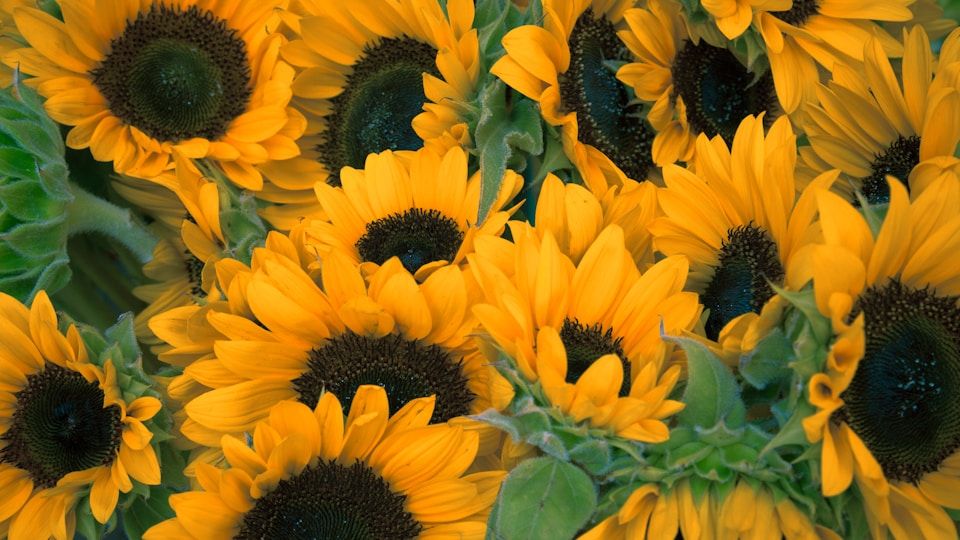
Sunflowers bring drama and height to any bouquet. Branching varieties like ProCut and Sunrich produce multiple stems per plant rather than a single giant flower head. Sow every 2-3 weeks for continuous blooms. They're also incredible pollinator magnets — your garden will be buzzing with bees.
Cosmos are the airiest, most romantic flowers in the cutting garden. Sensation Mix grows 4-5 feet tall with delicate flowers in pink, white, and crimson dancing on long, graceful stems. They're effortless to grow from seed and bloom until hard frost. They also self-sow freely, so you'll have free cosmos forever after the first planting.
Dahlias are the showstoppers. Nothing else produces such large, complex, eye-catching blooms from midsummer through frost. They require more effort than zinnias (you plant tubers, stake them, pinch them, and dig them up for winter), but the payoff is extraordinary. Café au Lait, with its enormous blush-peach blooms, is the single most popular cut flower in the world right now. We have a full dahlia growing guide if you want to dive deep.
The Supporting Cast: Fillers and Foliage
Great bouquets aren't just about the star flowers — they need supporting players too. Fillers add volume, texture, and movement that make arrangements look professional rather than stiff.
My essential fillers: Bishop's lace (Ammi majus) is like a more delicate, garden-grown version of Queen Anne's lace — airy white umbels that make everything look elegant. Snapdragons add vertical spikes of color. Sweet peas offer intoxicating fragrance in spring. Celosia (both plume and crested types) adds unusual texture. And don't overlook herbs: flowering basil, dill heads, and mint sprigs all make beautiful, fragrant additions to bouquets.
For foliage, grow dusty miller (silvery leaves that go with everything), eucalyptus (if your climate allows), and mint or scented geranium for fragrance. Even vegetable garden plants can contribute: kale leaves, pepper branches with tiny fruits, and ornamental grass plumes all make striking additions.
Succession Planting: The Secret to Non-Stop Flowers
Here's what separates a cutting garden that produces for two weeks from one that produces for five months: succession planting. Instead of sowing all your seeds at once, plant a new batch every 2-3 weeks from late spring through midsummer.
My schedule looks roughly like this: First sowing in late spring (after frost) — zinnias, cosmos, sunflowers. Second sowing 3 weeks later — more zinnias, celosia, and sunflowers. Third sowing 3 weeks after that — another round of zinnias and a final round of sunflowers. Meanwhile, dahlias planted in late spring start blooming in mid-July and continue until frost. This staggering ensures I have fresh flowers coming on continuously as earlier plantings wind down.
Harvesting Like a Pro
When you cut matters more than most people realize. Harvest early in the morning when stems are fully hydrated from the cool night air. Flowers cut in the afternoon heat of the day wilt faster and have shorter vase life.
Use sharp, clean snips — dull cuts crush stems and restrict water uptake. Cut at a 45-degree angle to maximize the surface area for water absorption. Immediately plunge stems into a bucket of cool water. Strip all leaves that would sit below the waterline — submerged foliage breeds bacteria that shortens vase life dramatically.
Here's a trick florists use: let your cut flowers rest in a cool, dark place for several hours (or overnight) before arranging. This process, called 'conditioning,' lets stems hydrate fully and results in arrangements that last 7-10 days instead of 3-4.
Most importantly: cut hard and cut often. I know it feels wrong to cut a beautiful flower, but in a cutting garden, harvesting IS the maintenance. Cutting stimulates the plant to produce more blooms. A zinnia you never cut will eventually produce one spent flower head. A zinnia you cut weekly will produce dozens of fresh blooms all season.
Arranging: You Don't Need to Be a Florist
The best thing about homegrown bouquets is that they look beautiful with zero effort. My go-to technique: grab a fistful of stems, hold them together while turning the bunch in one direction (this creates a natural spiral), plop them in a jar, and done. Seriously. The variety of textures, colors, and sizes from your cutting garden does all the design work for you.
If you want to level up slightly: start with your foliage and fillers to create a base, then add your star flowers, turning the vase as you go so it looks good from all angles. Odd numbers (3, 5, 7 stems of each type) look more natural than even numbers. And don't underestimate the humble mason jar — it's all many of us need.
Your First Year: Start Here
If you're creating a cutting garden from scratch, start with these five easy, reliable flowers: zinnias (direct sow), cosmos (direct sow), sunflowers (direct sow), snapdragons (buy transplants), and a filler like Bishop's lace (direct sow). All five are beginner-friendly, inexpensive to grow from seed, and will produce armloads of flowers in their first season.
In year two, add dahlias and sweet peas. By year three, you'll be the friend who shows up to every dinner party, barbecue, and birthday with a gorgeous homegrown bouquet — and trust me, that's a very nice person to be.