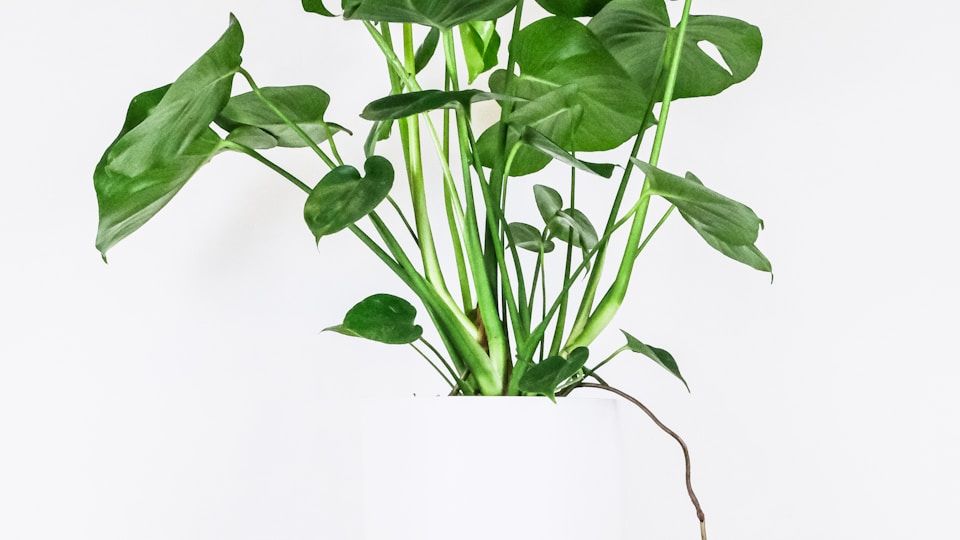
Monstera Care Guide: Light, Water, and Propagation
A friend once asked me why her Monstera wasn't developing the signature split leaves that make this plant so photogenic. Her plant was healthy, growing new leaves regularly — they were just solid green hearts with no holes or splits. The answer was simple: not enough light. Monsteras develop fenestrations (the botanical term for those dramatic holes and splits) in response to bright light. In dim conditions, they produce smaller, solid leaves because there's no advantage to having holes — in the wild, the splits help dappled rainforest light reach the lower leaves of the plant.
This is one of many things about Monstera care that becomes obvious once you understand how this plant lives in nature. Monstera deliciosa is a hemiepiphyte from the tropical forests of southern Mexico and Central America. In the wild, it starts life on the forest floor, then climbs trees using aerial roots, eventually reaching the canopy where it can produce leaves the size of a car door. Understanding its natural behavior makes caring for one at home surprisingly intuitive.
Light: The Key to Those Iconic Leaves
Bright, indirect light is the sweet spot. Think of where a tropical plant would grow on a forest floor: dappled light filtering through a tree canopy. In your home, this translates to a spot a few feet from an east or west window, or in the bright shade of a south window with a sheer curtain.
Direct sun — especially harsh afternoon sun — will burn the leaves, leaving crispy brown patches. Morning sun from an east window is gentle enough and actually beneficial. The 'leaf burn' you see on some Monsteras is almost always from midday or afternoon direct sun.
Low light won't kill a Monstera (they're remarkably tolerant), but it will result in slower growth, smaller leaves, and — as my friend discovered — fewer or no fenestrations. If your Monstera is producing small, unsplit leaves, it's telling you it wants more light. Move it closer to a window and you'll see the difference in new growth within a month or two.
One more light tip: rotate your plant 90 degrees every time you water. Monsteras grow toward light, and without rotation, they'll lean heavily to one side, eventually becoming lopsided. Regular rotation keeps growth balanced and symmetrical.
Watering: Less Than You Think
The biggest mistake people make with Monsteras is watering too frequently. In its native habitat, Monstera's roots are partially exposed to air (they climb trees, remember). They need to dry out somewhat between waterings to get oxygen to the roots.
Water when the top 2 inches of soil are dry. In bright conditions and warm temperatures, this might be every 7-10 days. In lower light or winter, it could be every 2-3 weeks. Always check rather than watering on a schedule.
The telltale signs: Yellow leaves (especially lower ones) typically indicate overwatering. Brown, crispy leaf edges usually mean underwatering or low humidity. Drooping leaves can mean either — check the soil. If it's wet and the plant droops, you've been overwatering and roots may be suffocating. If it's dry and the plant droops, it needs a drink.
Use a pot with drainage holes and a well-draining soil mix. I use a standard potting mix with about 30% perlite added — this creates the chunky, airy texture that Monstera roots prefer. Some growers add orchid bark or charcoal for even more drainage. The goal is a mix that holds moisture but never stays soggy.
Humidity, Temperature, and the Comfortable Tropical
Monsteras prefer humidity above 50%, which is higher than most homes during winter. Low humidity shows up as brown, crispy leaf tips and edges. Solutions: group plants together (they create a microclimate of higher humidity), place the pot on a tray of pebbles and water (the evaporating water raises humidity immediately around the plant), or run a humidifier nearby. Misting is often recommended but honestly provides only seconds of elevated humidity — I've stopped bothering.
Temperature-wise, keep Monsteras above 55°F. They're happiest at 65-80°F — basically typical room temperature. Keep them away from cold drafts (leaky windows, exterior doors) and heating vents (which blast dry, hot air that desiccates leaves).
Support: Helping It Climb
In nature, Monstera climbs trees. Its aerial roots grip bark, anchor the plant, and absorb moisture. Indoors, providing a support structure encourages larger leaves and a more impressive growth habit.
Moss poles are the classic choice: a cylinder of sphagnum moss on a stake. Aerial roots grow into the damp moss, anchoring the plant and absorbing moisture. Keep the moss moist by misting it regularly or watering it directly. The plant responds by producing larger, more dramatically fenestrated leaves — because it 'thinks' it's climbing toward the canopy.
Coco coir poles, wooden planks, and even simple bamboo stakes work too. Honestly, any vertical structure that the aerial roots can grip will do. My largest Monstera is growing up a DIY cedar plank, and its newest leaves are over 2 feet across with spectacular fenestrations.
If you prefer a bushier look, let the plant trail without support — it'll grow horizontally, producing smaller but still attractive leaves. But if you want those Instagram-worthy massive split leaves, go vertical.
Propagation: Making More Monsteras (It's Ridiculously Easy)
Monstera is one of the easiest houseplants to propagate, which is a good thing because at some point your plant will outgrow its space and you'll need to trim it back.
Water propagation: Find a node — the knobby bump on the stem where an aerial root and leaf emerge. Cut just below this node with clean scissors or a sharp knife. Place the cutting in a jar of water, making sure the node is submerged but the leaf stays above water. Put it in bright, indirect light and change the water weekly.
Roots will appear in 2-4 weeks. Once they're 2-3 inches long, pot the cutting in well-draining soil. Water thoroughly and place in bright indirect light. Congratulations — you've just created a new plant. It really is that simple.
You can also propagate directly in moist sphagnum moss or a mix of perlite and peat — some people find this produces stronger roots that transition to soil more easily. But water propagation works great and has the added benefit of being visible through a glass jar, so you can watch roots develop in real time. It's genuinely delightful.
Common Problems (And Their Surprisingly Simple Fixes)
Yellowing leaves: Usually overwatering. Check the soil — if it's soggy, let it dry out before watering again. Remove any severely yellowed leaves (they won't recover) and adjust your watering schedule.
Brown spots: Could be sunburn (if the spots are on the side facing the window) or fungal leaf spot (if they appear randomly). Move the plant from direct sun or improve air circulation for fungal issues.
No fenestrations: Not enough light. Move to a brighter spot. Young plants also naturally produce solid leaves — fenestrations typically start appearing once the plant is mature enough and in sufficient light. Patience helps here.
Pests: Monsteras occasionally get spider mites (tiny specks and fine webbing on leaf undersides), mealybugs (white cottony masses in leaf joints), or thrips (tiny elongated insects). Wipe leaves regularly with a damp cloth to prevent infestations. Treat active infestations with neem oil or insecticidal soap. Healthy plants in good conditions rarely have serious pest problems.
The Plant That Earns Its Hype
Monsteras became Instagram famous for a reason. Those dramatic split leaves, the satisfying unfurling of a new leaf, the architectural presence of a large specimen in a room — it's a plant that genuinely transforms a space. And despite its exotic looks, it's genuinely not hard to grow. Bright indirect light, water when dry, something to climb on, and a bit of humidity. That's the recipe for the houseplant that makes everyone feel like a skilled gardener.